Uppercase letters have a structural advantage that makes them genuinely easier to learn first. Most of them are built from straight lines and simple curves — T is just two lines, L is two lines, H is three. There's less ambiguity in the shapes, fewer letters that mirror each other, and the forms are consistent across most fonts and handwriting styles.
That's not an accident. It's a reasonable place to start, and most early learning materials do exactly that. These flash cards lean into that logic — clean capital letters, one per card, nothing extra.
Why uppercase first makes sense
When children see their own name written out, it's usually with a capital at the front. Street signs, shop fronts, book covers — uppercase letters show up in the environment constantly, which means children often have partial familiarity before any formal teaching begins.
That prior exposure is worth building on. Starting with uppercase reinforces what children already half-know, which makes early wins more likely and keeps frustration lower than jumping straight into the more complex lowercase forms.
Uppercase letters also have fewer confusable pairs. The notorious b/d/p/q problem is almost entirely a lowercase issue — B, D, P, and Q are distinct enough that most children don't mix them up the same way.
What's in the set
- 26 uppercase letter cards covering the full A–Z alphabet
- Grouped into sets of 3–4 letters for manageable practice sessions
- One letter per card, clean layout with no distractions
- Prints on A4 and US Letter
How to use them
The simplest approach works well: pick four or five cards, lay them face up, say each letter name together, then flip them over one at a time and ask your child to name them from memory. Swap in new letters once the current ones are solid.
A few other things worth trying:
- Use the cards to spell out your child's name — familiar letters land faster
- Sort the cards into "straight line letters" (E, F, H, I, L, T) and "curved letters" (C, G, O, Q, S) — it builds shape awareness
- Mix a known letter in with two new ones so there's always something your child can get right
- For Q and O, or for C and G, lay those pairs side by side rather than separately
Printing tips
Standard 80gsm paper works, but these cards hold up much better on heavier stock. Around 200gsm is ideal — the cards stay rigid in small hands and don't bend at the corners after a few sessions. If heavier paper isn't an option, printing on regular paper and laminating is a practical alternative.
Print settings: actual size (not scaled to fit), high quality, portrait orientation.
A paper trimmer makes cutting faster and cleaner than scissors for a full set, but scissors are fine for a few cards at a time.
Download the Uppercase Flash Cards
The full A–Z set is split into groups of 2 or 4 letters. Download one group at a time or grab them all at once.
Uppercase Letters A–D
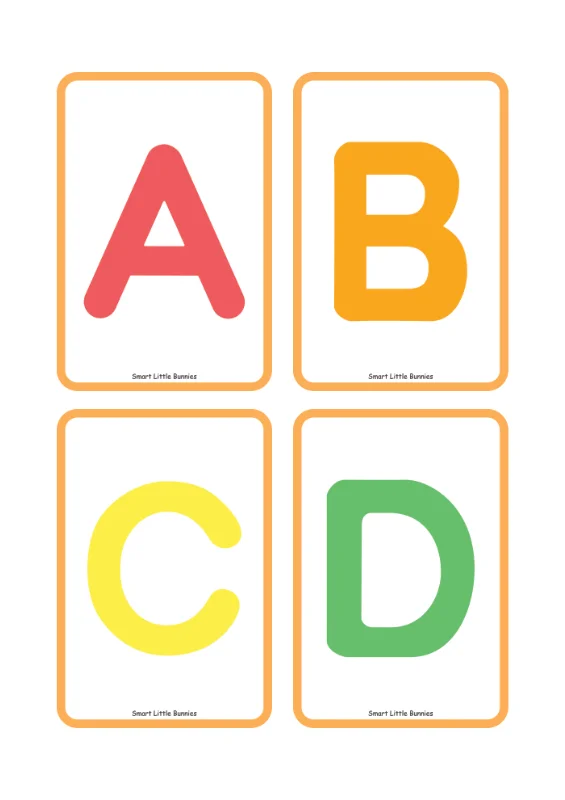
The first four letters of the alphabet. A and D are often among the first letters children recognise, partly because of their names and partly because A appears at the front of every alphabet display.
Download A–D Flash Cards (US Letter)
Uppercase Letters E–H
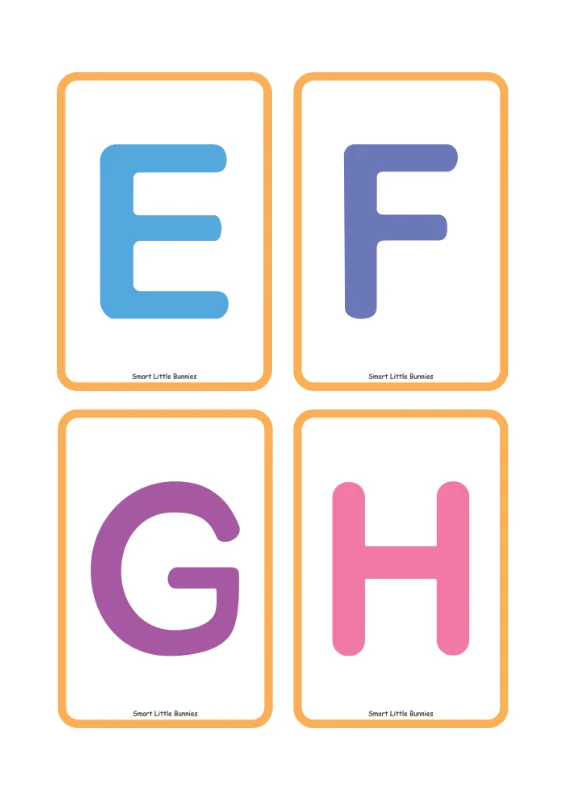
E, F, and H are all built from straight lines, which makes them good early pencil-control letters. G is the first card in the set with a significant curve plus an inward stroke, so it tends to need a little more time.
Download E–H Flash Cards (US Letter)
Uppercase Letters I–L
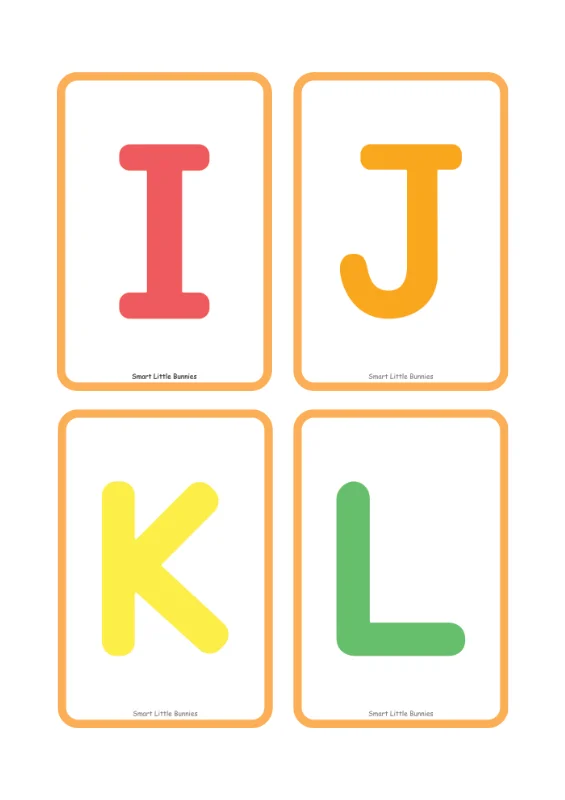
I and L are the simplest letters in the alphabet by stroke count. J introduces the first real curve in this group, and K is the first letter with diagonal strokes — worth slowing down on.
Download I–L Flash Cards (US Letter)
Uppercase Letters M–P
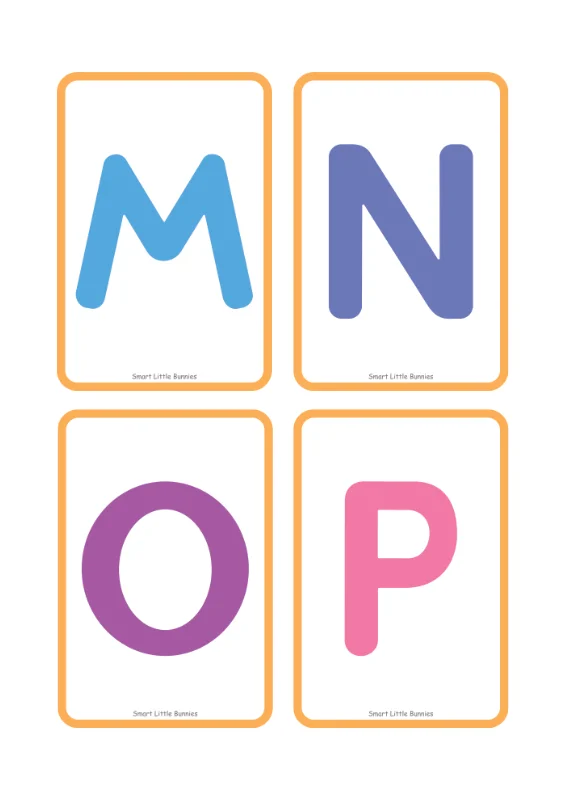
M and N are commonly confused because of their similar vertical-and-diagonal structure. Laying those two cards side by side and counting the strokes together helps children see the difference clearly.
Download M–P Flash Cards (US Letter)
Uppercase Letters Q–T
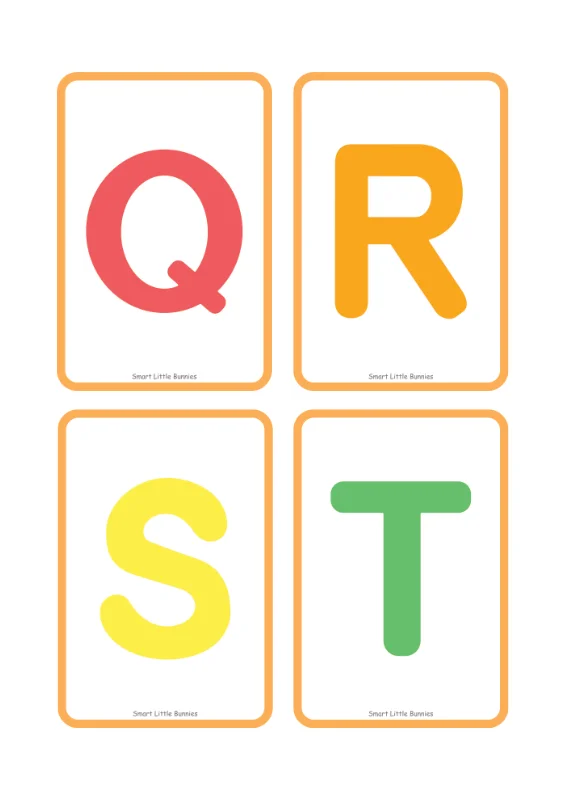
Q is the one uppercase letter that consistently trips children up — it looks almost identical to O with a small tail. Pair these two cards together when introducing Q so the difference is immediately visible.
Download Q–T Flash Cards (US Letter)
Uppercase Letters U–X
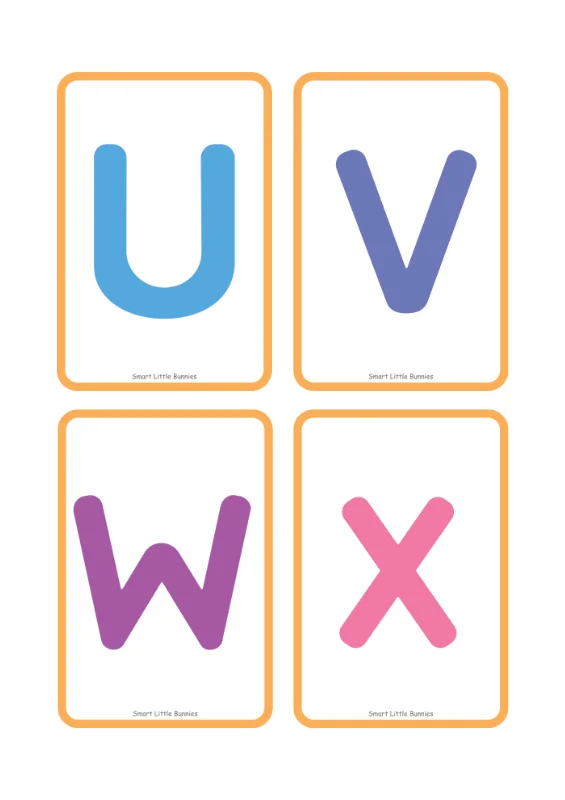
U and V are another pair worth comparing side by side — the curved bottom of U versus the pointed bottom of V is the key distinction. X is one of the few uppercase letters children usually enjoy, possibly because of how it's used outside the alphabet.
Download U–X Flash Cards (US Letter)
Uppercase Letters Y–Z
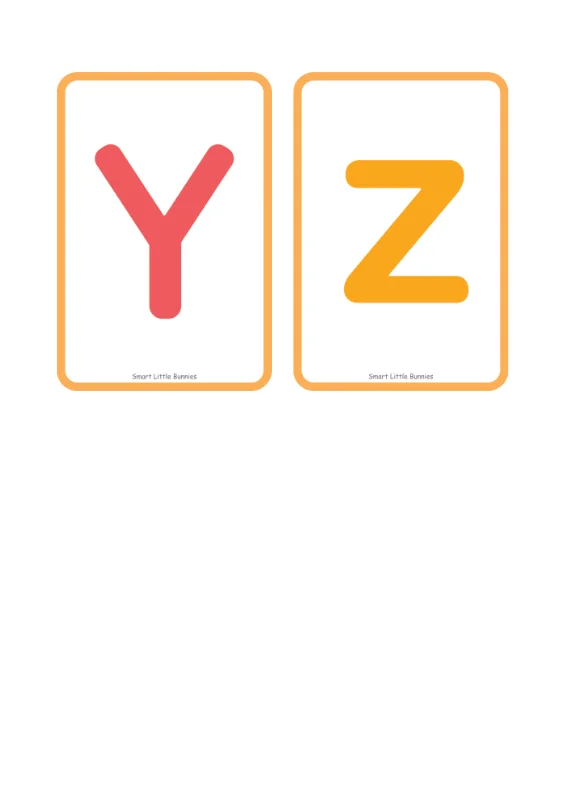
The final two letters. Z is a satisfying one to finish on — three strokes, easy to remember, and children tend to feel a genuine sense of completion when they get to Z.
Download Y–Z Flash Cards (US Letter)
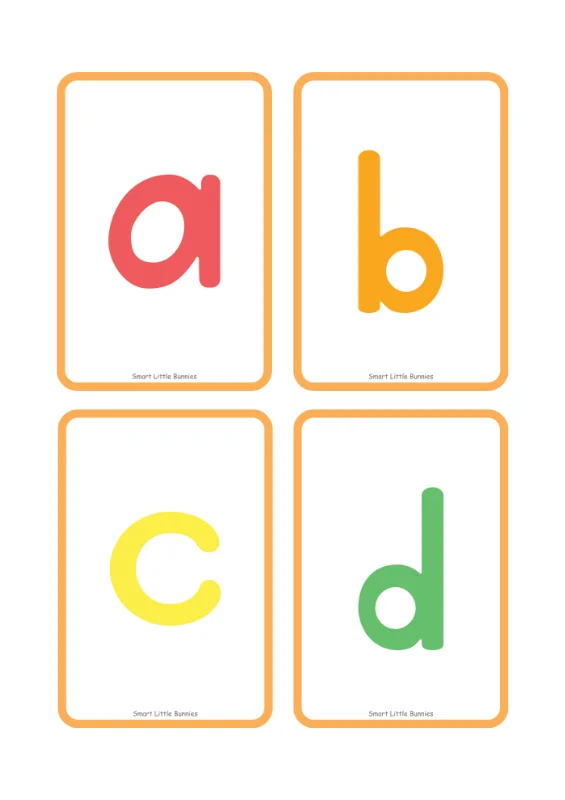
Once the full uppercase set feels familiar, move on to the lowercase alphabet flash cards — the same format, but covering the letter forms children will see most often once they start reading books.