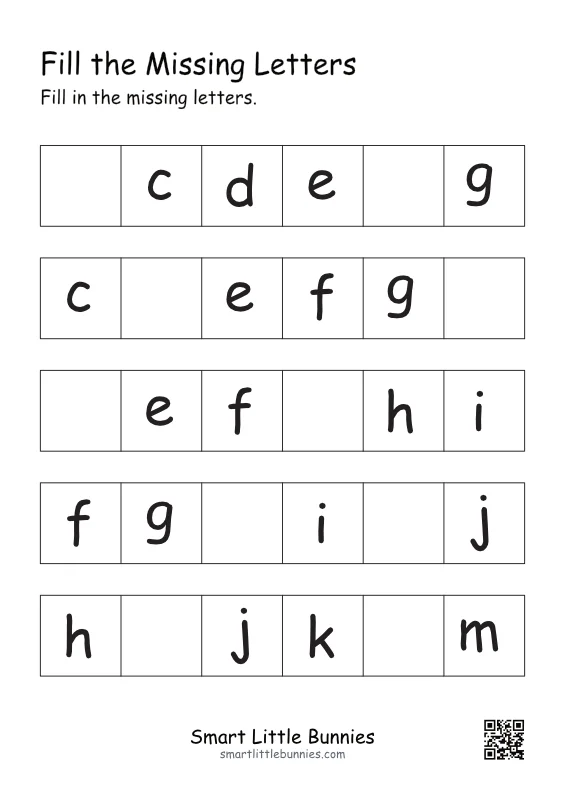
Most children meet uppercase letters first — on building blocks, alphabet posters, the front of cereal boxes. Lowercase comes later, and for a lot of kids it's genuinely confusing at first. The shapes change. B becomes b. R becomes r. And then there are b, d, p, and q, which look nearly identical depending on which way you're facing.
These flash cards are designed around that reality. Each card shows one lowercase letter clearly, with enough space around it that the shape reads on its own without visual noise. No pictures competing for attention, no decorative fonts — just the letter, the way it actually appears in books.
Why Lowercase Specifically
Uppercase letters get most of the early attention, but the vast majority of text children will actually read is written in lowercase. Getting comfortable with these shapes early makes the jump to reading words much smoother. It also helps with writing — children who can recognise a lowercase letter tend to form it more confidently too.
The letters that cause the most confusion (b/d, p/q, n/h, m/w) each appear in their own card set with enough spacing that children can slow down and look carefully.
What's in the Set
- 26 lowercase letter cards covering the full a–z alphabet
- Grouped into sets of 3–4 letters so children aren't overwhelmed
- Clean layout designed for home printing — works on A4 and US Letter
- One letter per card, nothing extra
How to Use Them
There's no single right way. Some children respond well to a quick daily drill — flip through a few cards, say the letter name, move on. Others do better with a matching activity, pairing these lowercase cards against their uppercase versions.
A few approaches that tend to work:
- Start with letters in your child's name, since those already feel familiar
- Introduce 3–4 new letters at a time rather than all 26 at once
- Once a letter is solid, set it aside and focus on the ones that still need work
- For b/d/p/q confusion, try those cards side by side rather than one at a time
Printing Tips
These print fine on standard 80gsm paper, but the cards last much longer on something heavier (around 200gsm). If you're using regular paper, laminating after printing makes a noticeable difference — the cards stay flat, don't dog-ear, and survive being handled repeatedly.
Print settings: high quality or photo, actual size (not "fit to page"), portrait orientation.
Once printed, a paper trimmer gives cleaner edges than scissors, though scissors work fine for smaller sets at home.
Download the Lowercase Flash Cards
The full a–z set is split into groups of 2 or 4 letters. Download one group at a time or grab them all.
Lowercase Letters a–d
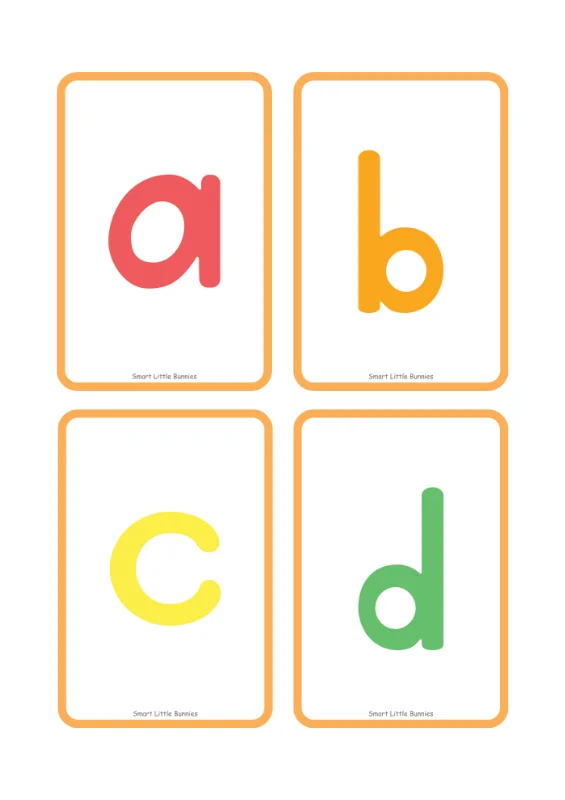
Printable lowercase flash cards for letters a to d. Designed to support early letter recognition and reading readiness.
Download a–d Flash Cards (US Letter)
Lowercase Letters e–h
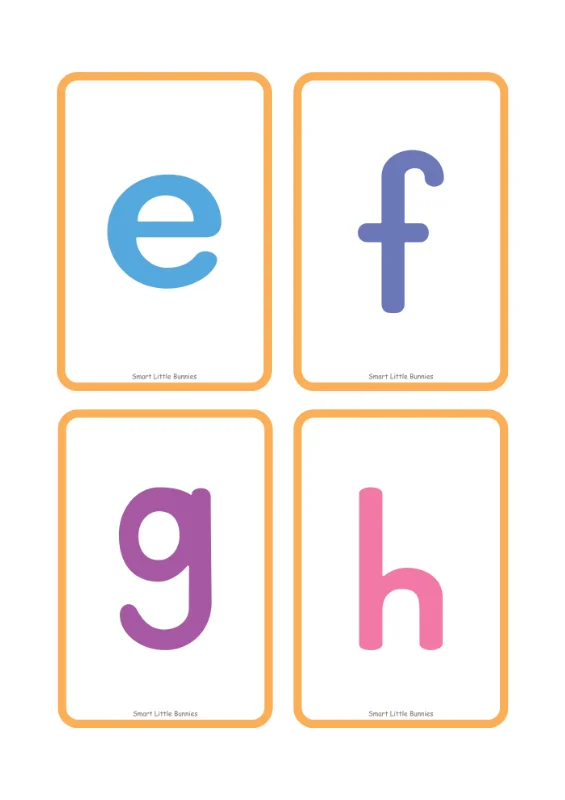
Printable lowercase flash cards for letters e to h, including the commonly confused e and h shapes.
Download e–h Flash Cards (US Letter)
Lowercase Letters i–l
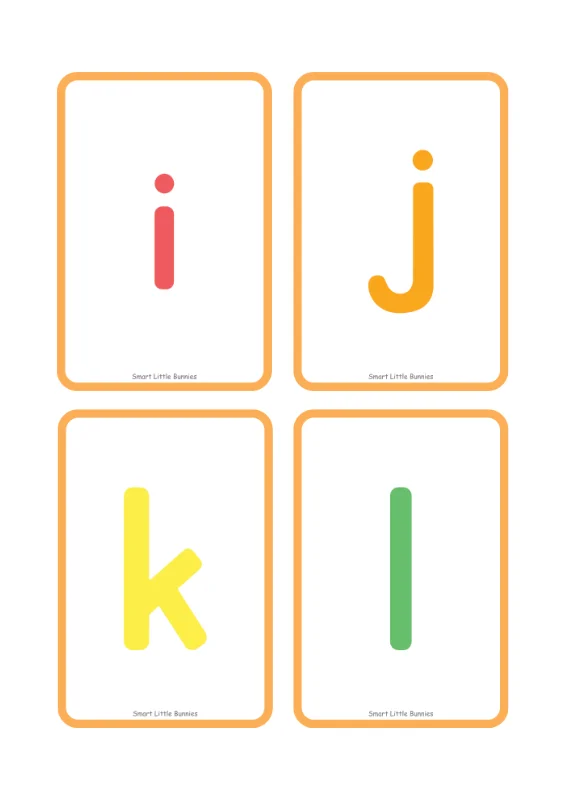
Lowercase flash cards for letters i to l, including the tall l that children often undersize when writing.
Download i–l Flash Cards (US Letter)
Lowercase Letters m–p
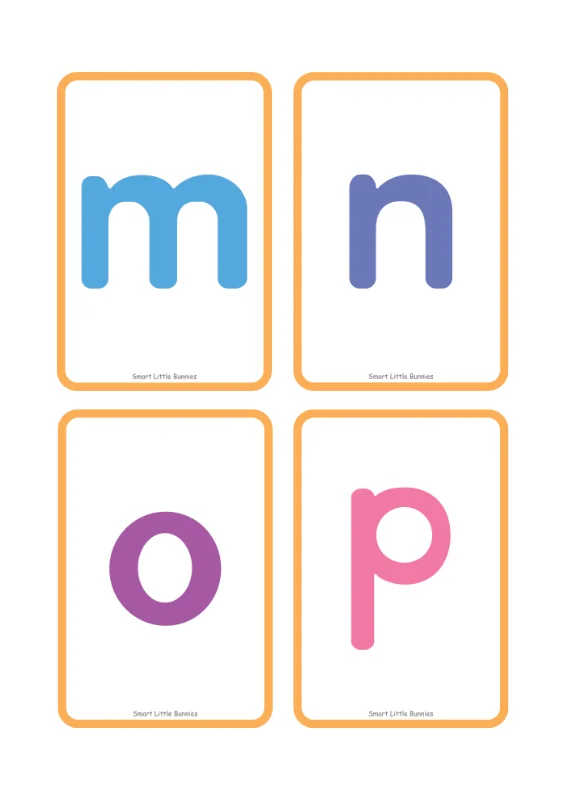
Lowercase flash cards for letters m to p, covering the m/n and p/q shapes that trip children up most often.
Download m–p Flash Cards (US Letter)
Lowercase Letters q–t
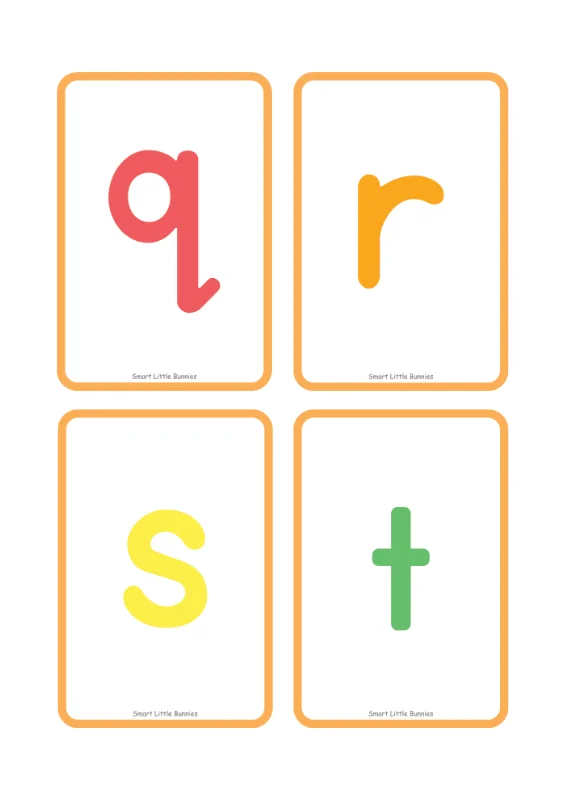
Lowercase flash cards for letters q to t, including q which children frequently reverse when writing.
Download q–t Flash Cards (US Letter)
Lowercase Letters u–x
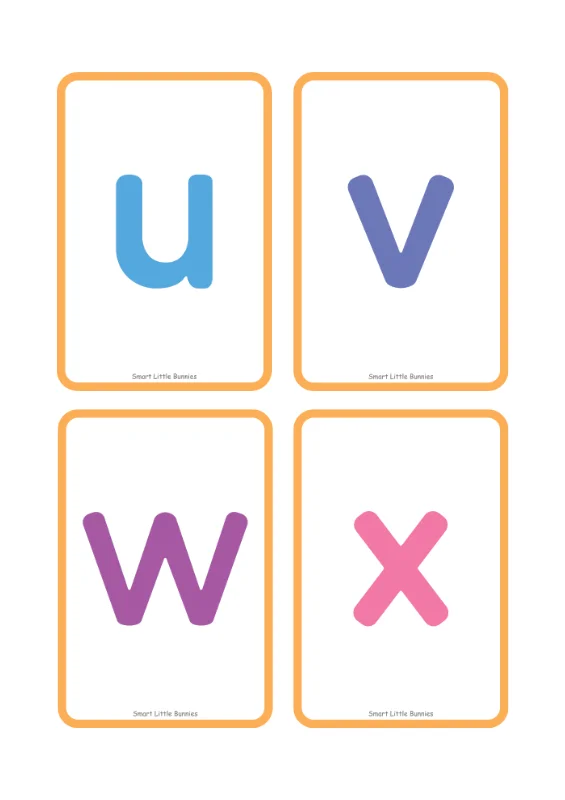
Lowercase flash cards for letters u to x, including x which is one of the less frequently seen shapes in early reading.
Download u–x Flash Cards (US Letter)
Lowercase Letters y–z
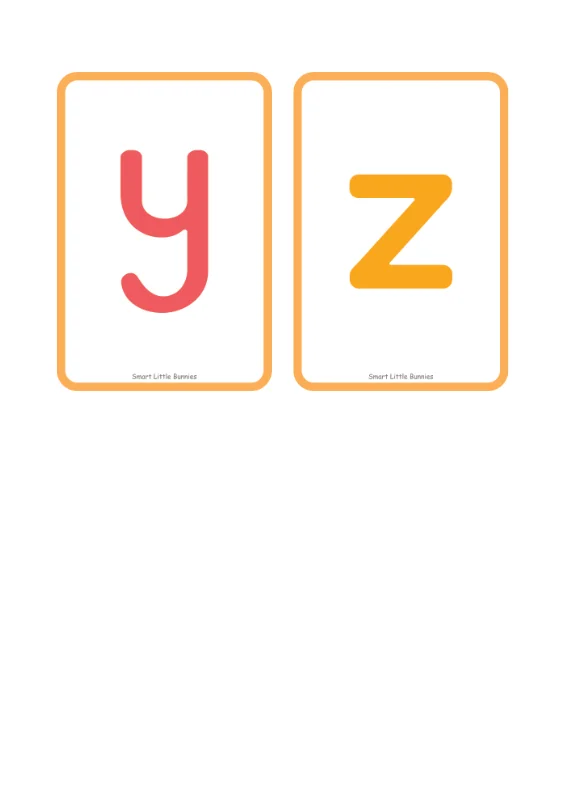
Lowercase flash cards for letters y and z, completing the full a–z set.
Download y–z Flash Cards (US Letter)
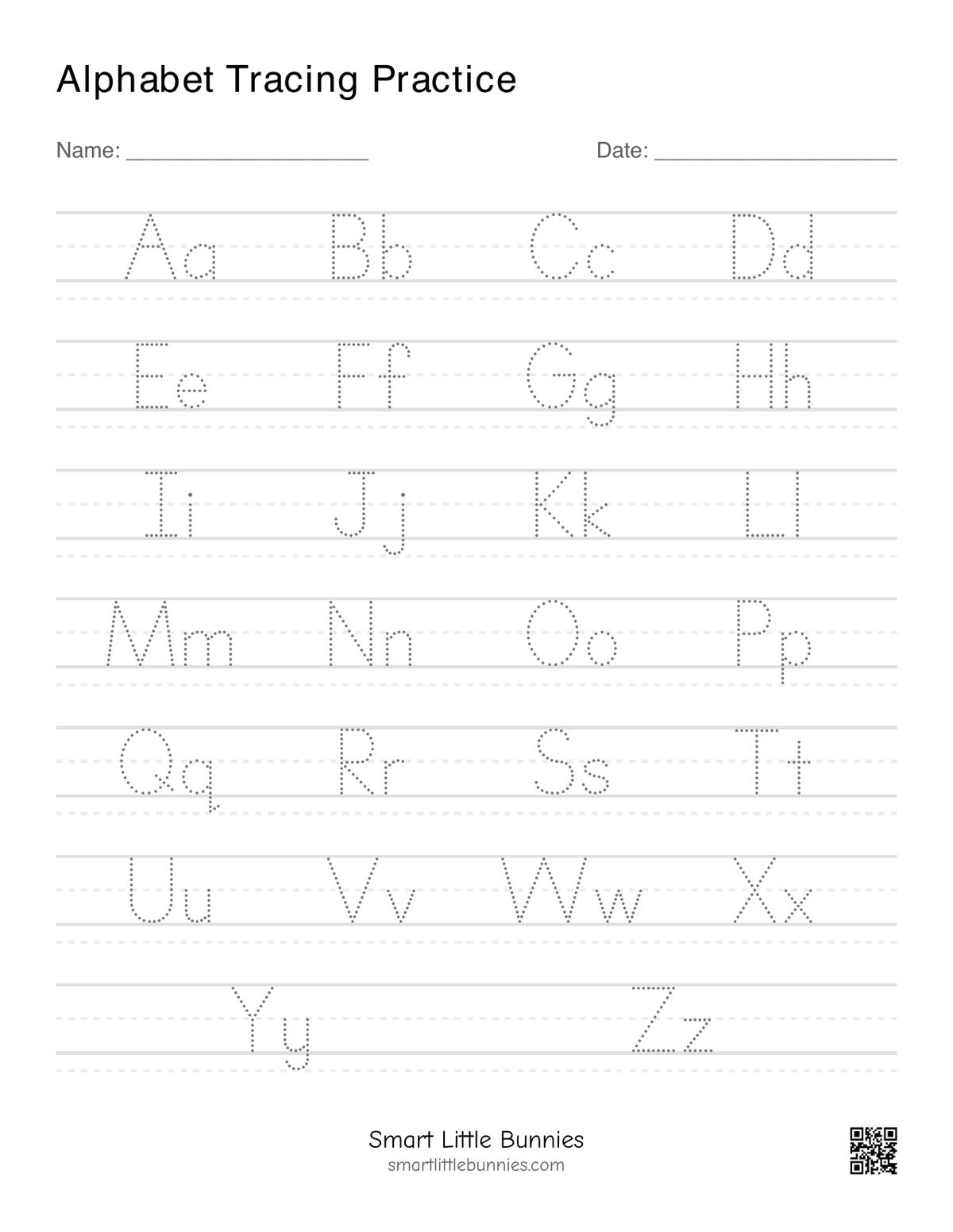
Once you have the full set printed and cut, pair them with the alphabet tracing worksheets to reinforce both recognition and formation at the same time.
Not done with uppercase yet? Grab the uppercase alphabet flash cards first and come back to these once the capital letters feel solid.