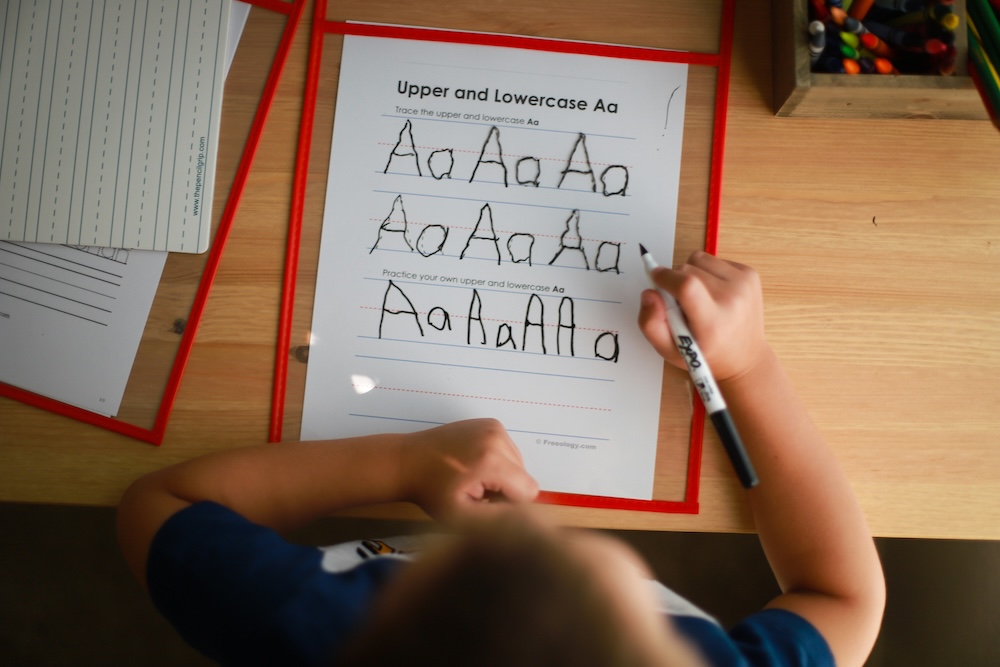
Photo by Courtney Kirkland on Unsplash
Disclosure: This article may contain affiliate links. If you choose to purchase through these links, I may earn a small commission at no extra cost to you. I only recommend products that are helpful for learning activities.
Starting school is a big milestone for both children and parents. It often comes with a mix of excitement, curiosity, and a little bit of worry. Many parents quietly ask themselves the same question: “Is my child really ready?”
If you're wondering whether your child is ready, you're not alone.
My child is starting school next year, and I found myself asking the same question:
“Is she on the right track?”
The more I looked into it, the more I realised that school readiness is not about being ahead. It's about having a strong foundation. Children don't need to know everything before they start school. What matters most is that they feel confident, curious, and ready to learn.
This guide will walk you through what most 5 year olds should know before starting school.
1. Basic Thinking and Learning Skills
Before children learn specific subjects like reading or math, they first need to develop the ability to think, focus, and process information. These foundational skills help them follow instructions in class and stay engaged in activities.
At this age, learning happens through play, exploration, and repetition. Curiosity is one of the strongest indicators that a child is developing well.
A child can usually:
- Follow simple instructions with 2-3 steps
- Stay focused on an activity for around 5-15 minutes
- Ask questions and show curiosity about the world
- Recognise simple patterns and sequences
You can support these skills with simple activities like puzzles, matching games, or pattern worksheets.
Try simple logic worksheets for kids to help build thinking and problem solving skills in a fun and structured way.
2. Early Reading and Writing Skills
Children don't need to be fluent readers before school. What matters is early exposure to letters, sounds, and writing. These are the building blocks that teachers will expand on.
One of the most meaningful early writing skills is recognising and writing their own name. For many children, their name is the first word they feel connected to, which makes it a powerful starting point for learning.
Being able to identify their name, say it clearly, and attempt to write it helps build confidence and gives them a sense of ownership in their learning.
You can create personalised practice using our name tracing generator, which lets children trace their own name in a fun and engaging way.
You may notice your child recognising letters or trying to write their name. Even imperfect attempts are a strong sign of progress.
Most 5 year olds should:
- Recognise some or most letters of the alphabet (A-Z)
- Know the sounds of some letters
- Recognise and attempt to write their own name
- Hold a pencil with some level of control
To support this, you can practice regularly with:
Small tip: Some children benefit from slightly thicker pencils or grips when they're still developing control.
Many parents find tools like a pencil grip for kids help improve comfort and control when learning to write.
3. Basic Math Skills
Math at this stage is about understanding numbers in real life, not solving problems on paper. Children begin to understand quantity, comparison, and counting.
You might notice them counting toys or asking “which one is bigger?”.These are all early math skills.
Look for these skills:
- Counting from 1 to 10 (or higher)
- Recognising numbers
- Understanding “more” and “less”
- Sorting objects by size, shape, or color
You can support this learning with:
- Number tracing worksheets
- Counting worksheets
- Counting games using everyday objects
- Addition activities
4. Pre-Writing and Fine Motor Skills
Before writing letters, children need strong hand control. This is where pre-writing activities play an important role.
Many parents focus on letters too early, but practicing lines and shapes actually builds the foundation for better writing later.
Important skills include:
- Drawing straight, curved, and zigzag lines
- Coloring within shapes
- Using scissors safely
- Handling small objects like blocks
You can build these skills with:
- Pre-writing worksheets (lines and patterns)
- Coloring activities
- Craft and play based activities
Activities like coloring and drawing are not just fun, they help build the hand strength needed for writing.
Using good quality coloring pencils for kids can make these activities more enjoyable and encourage longer practice time.
For cutting activities, child safe tools are important.
You can use safety scissors for kids to help children practice safely while building fine motor skills.
5. Communication Skills
Communication is a big part of school life. Children need to express their needs, understand instructions, and interact with others throughout the day.
At this age, children are still developing their language skills, but they should be able to communicate clearly enough to be understood.
A child ready for school can usually:
- Speak in simple sentences
- Express needs clearly
- Understand basic instructions
- Listen when others are speaking
Talking regularly with your child, reading together, and encouraging conversation can greatly support these skills.
6. Social and Emotional Skills
Social and emotional development is just as important as academic skills, if not more. School is a shared environment where children learn how to interact with others.
Some children naturally find this easier than others, but all children benefit from gentle guidance and practice.
A school ready child is beginning to:
- Take turns and share
- Play cooperatively with others
- Manage simple emotions
- Separate from parents with minimal distress
These skills take time to develop, and they will continue to grow once school begins.
7. Independence Skills
Independence helps children feel confident and capable in a school environment. Small daily routines at home can make a big difference.
When children can manage simple tasks on their own, they feel more secure and less overwhelmed.
Helpful independence skills include:
- Going to the toilet independently
- Washing hands
- Opening lunch boxes
- Putting on shoes or clothing
Practicing these regularly helps build confidence before school starts.
Do They Need to Know Everything?
It's easy to feel pressure to prepare your child for everything before school starts. But the truth is, no child is fully prepared and they don't need to be.
Every child develops at their own pace, and that's completely normal.
What matters most is:
- Willingness to try
- Confidence
- Curiosity
These qualities will support learning far more than any specific skill.
Simple Daily Routine to Prepare Your Child
Preparing your child for school doesn't require long study sessions. Short, consistent practice is far more effective.
Even 20 to 30 minutes a day can make a meaningful difference.
A simple routine could be:
- 10 minutes: tracing or writing
- 10 minutes: reading or phonics
- 10 minutes: counting or simple games
If you prefer something structured, you can also follow a step-by-step printable learning plan that combines these skills into one routine.
Final Thoughts
School readiness is not about perfection. It's about preparation.
As I thought about my own child starting school next year, I realised that being “on track” isn't about knowing everything. It's about being ready to learn.
If your child:
- Shows curiosity
- Can follow basic instructions
- Has some early literacy and number skills
They are already on the right path.
Want a Simple Way to Practice at Home?
If you want everything organised in one place, you can use:
- Structured worksheet bundles
- Daily learning plans
- Skill-based printable packs
These are designed to save time and make learning feel simple and consistent, especially if you're not sure where to start.
Helpful Tools for Learning at Home
If you're setting up simple learning activities at home, a few small tools can make a big difference:
- Comfortable pencil grips for better writing control
- Easy-to-hold pencils for beginners
- Coloring materials for fine motor practice
You can explore simple options here: