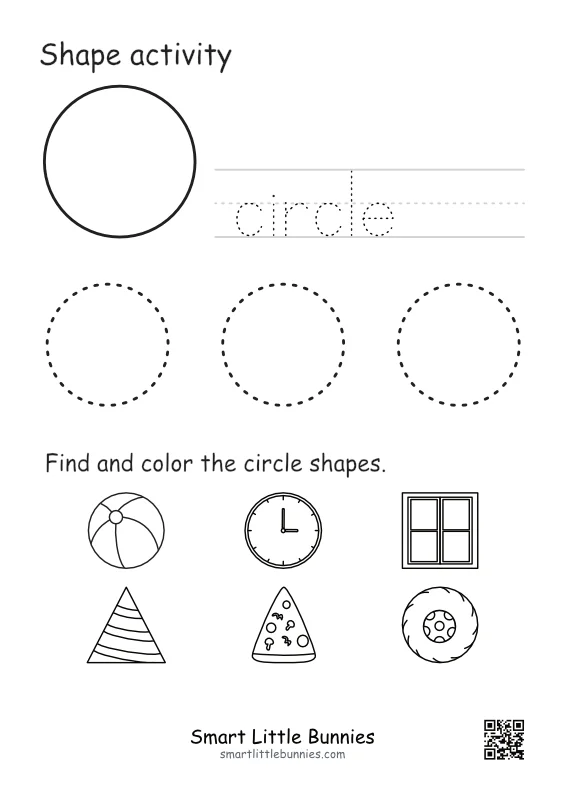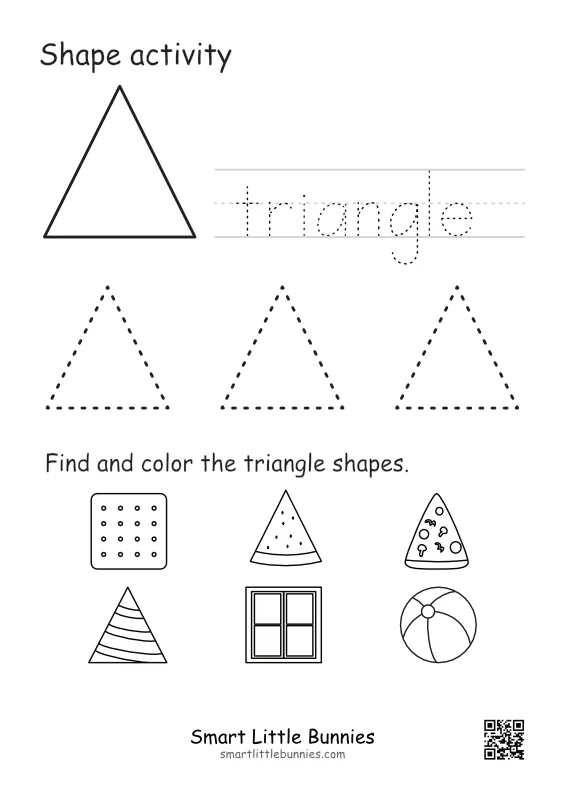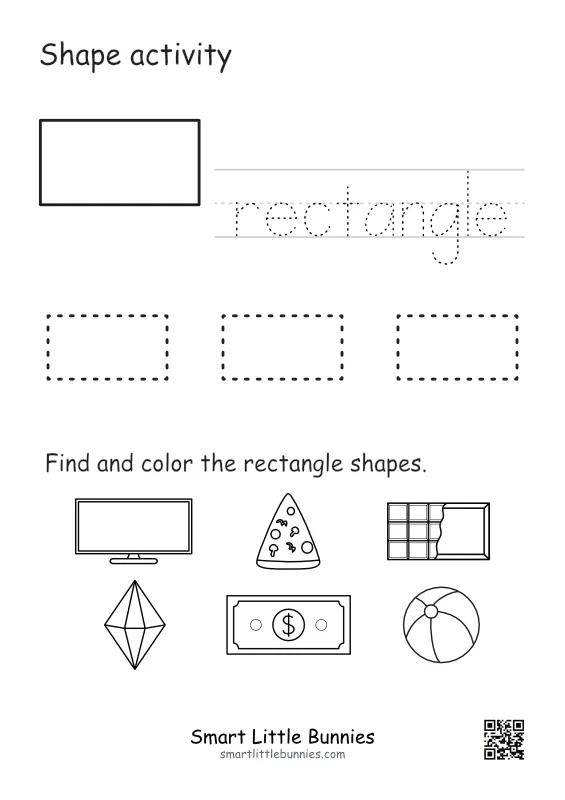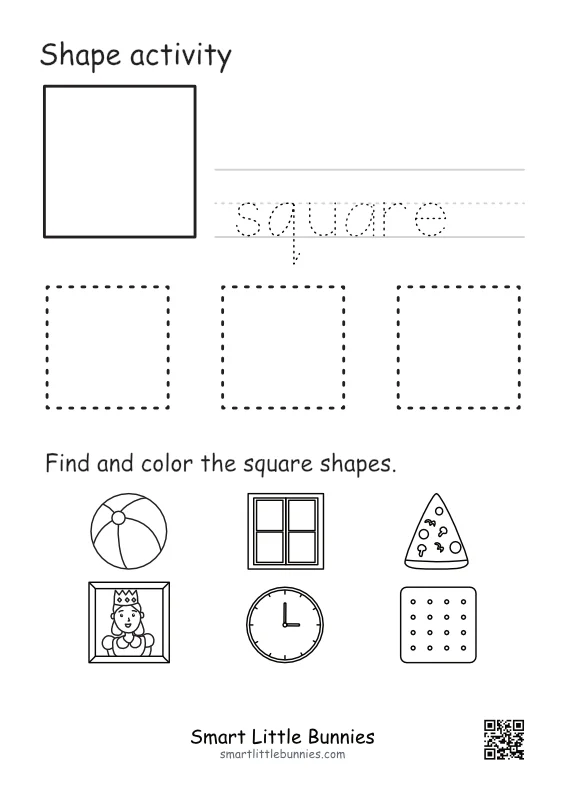
Explore the square, a shape with four equal sides and four corners, found in windows, tiles, books, puzzles, and many everyday objects.
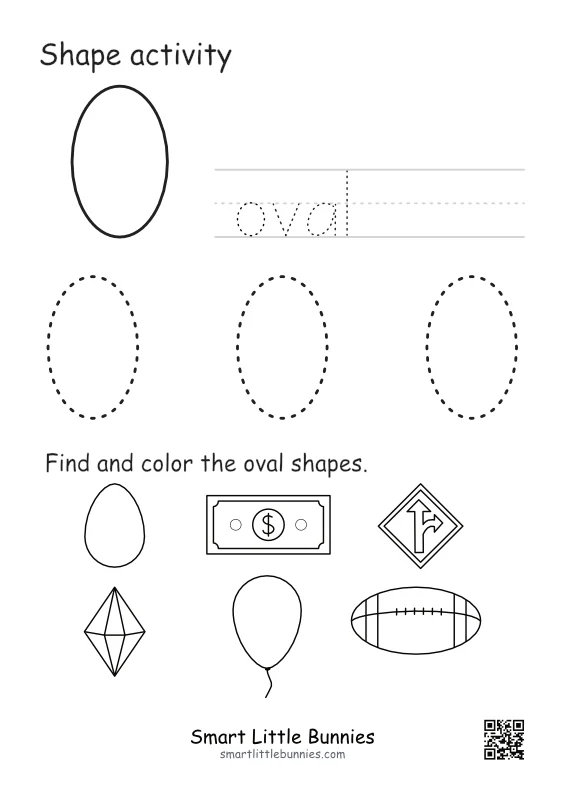
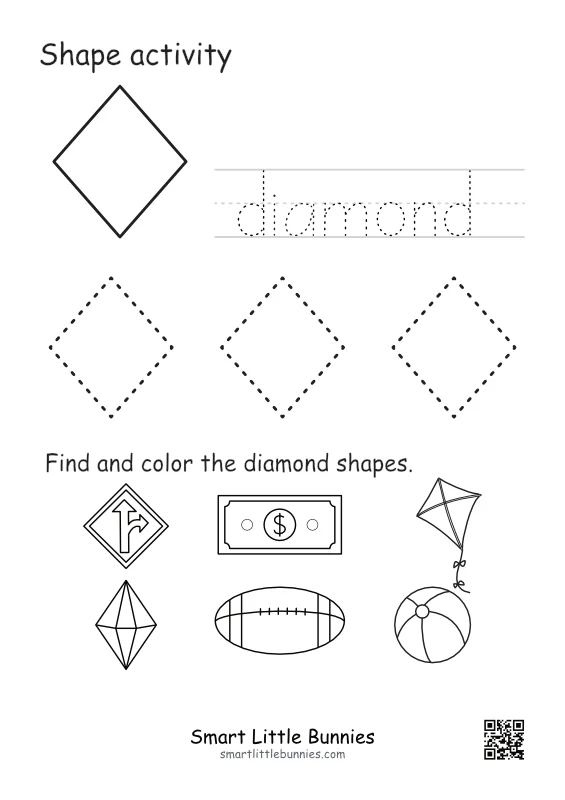
This square tracing worksheet gives young learners a clear and simple way to practice identifying, tracing, and coloring squares. As children follow each outline, they develop stronger fine motor skills, better shape recognition, and an early understanding of geometry concepts that will support later math learning.
What’s Inside the Square Worksheet
This worksheet focuses on helping children build confidence with one of the most important early shapes. Inside, they will find:
- A large square at the top left for easy visual introduction
- The word “square” printed next to it for handwriting practice
- Three smaller squares below, giving kids repeated tracing opportunities
- A row of six mixed shapes at the bottom, children identify and color only the squares
This layout encourages children to look closely at shapes and notice what makes a square different from rectangles, circles, and triangles.
Why Learning Squares Matters
Squares appear frequently in a child's daily environment. Learning to recognize and trace them helps children strengthen:
- Visual discrimination — noticing equal side lengths and sharp corners
- Fine motor development — practicing straight lines and precise turns
- Shape vocabulary — talking about sides and corners using early math language
- Problem solving skills — identifying shapes in mixed groups or patterns
These skills form a strong foundation for early geometry, spatial reasoning, and numeracy.
How to Use This Printable
- Print the worksheet on A4 paper for best results.
- Begin by having kids trace the large square, focusing on slow, steady strokes.
- Next, encourage them to trace the word “square” to reinforce both shape and handwriting practice.
- Move on to the three smaller squares to build confidence and pencil control.
- At the bottom, ask children to examine the six mixed shapes and color only the squares.
- Extend the activity by having kids find real life squares around the room, tiles, blocks, sticky notes, napkins, windows, or paper pieces.
These hands on steps help children connect shape learning on the worksheet to real world objects.
Perfect for Preschool and Kindergarten
This worksheet is ideal for classrooms, homeschooling, math centers, or quiet independent practice. It supports:
- Shape recognition
- Hand-eye coordination
- Pencil grip and tracing skills
- Early geometry awareness
- Focus and attention to detail
The clean layout ensures young learners stay engaged without distractions.
Download the free PDF below and let kids trace, color, and discover the world of squares with confidence!